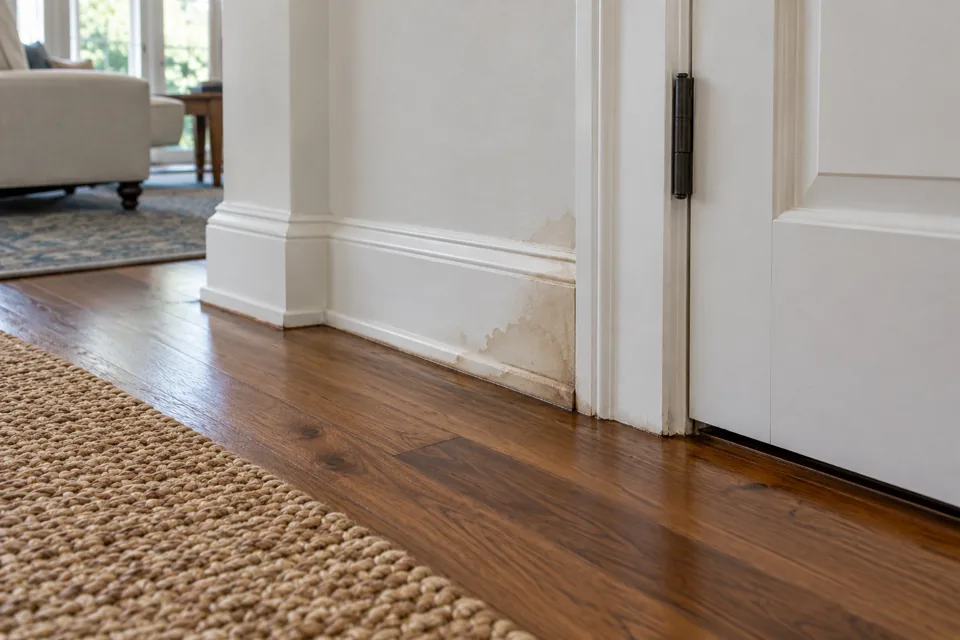
The job is to stop the source, remove the water, dry the structure and document everything before mold and permanent damage set in. Use Call Now to describe what happened and you will be connected with an independent restoration company serving the Charleston area.
Water categories and loss classes
| Term | Meaning | Example |
|---|---|---|
| Category 1 | Clean water from a sanitary source | A burst supply line or a failed ice maker line |
| Category 2 | Water with some contamination | Washing machine or dishwasher overflow |
| Category 3 | Grossly contaminated water | Sewage backup, river or storm flooding |
| Class 1 | Least water and slow evaporation | A small area with low-porosity materials |
| Class 2 | Large area, carpet and cushion wet | A whole room with wet walls up to 24 inches |
| Class 3 | Fastest evaporation, water from above | A roof leak that wets ceilings, walls and floors |
| Class 4 | Specialty drying | Hardwood, plaster, concrete and other low-permeance materials |
Why speed matters for mold
Many guidelines say to dry wet materials within 24 to 48 hours to limit mold. After that, mold can start growing on drywall paper, wood and insulation. A restoration team that begins drying quickly lowers that risk. If mold is already present, remediation follows the EPA and IICRC S520 approach with containment and removal.
Contents, pack-out and cleaning
- Clean and sanitize hard contents and dry soft contents where possible
- Move furniture and valuables out of the wet area before drying starts
- Deodorize if odors remain after drying
- Pack out items for off-site cleaning if the room must be emptied
- Photograph and list items for insurance
Extraction and removal
Pumps and extraction units, truck-mounted or portable, remove standing water. Pad that has absorbed water is generally taken out, and the carpet itself may be lifted and dried or discarded according to the category. If wet drywall and insulation are contaminated, or cannot be dried reliably, they are cut out above the water line, commonly two feet up.
Drying: air movers, dehumidifiers and monitoring
After extraction, air movers push dry air across wet surfaces and dehumidifiers pull moisture out of the air, so water leaves materials and does not simply move around. Technicians return to check moisture readings each day and adjust equipment until the materials meet the dry standard, which is set from comparable unaffected materials in the same building.
Questions to ask a restoration company
- What do you document for my insurer?
- What will you remove and what will you dry in place?
- Is repair included, or only mitigation, and who does the rebuild?
- How many air movers and dehumidifiers will be used, and how will you show the readings?
- What water category and loss class do you assess, and why?
How water damage restoration works from the first call to dry standard
Time works against you when water gets in. How much material survives depends on the first hours, so restoration follows a set order and records each step.
- Safety first: stop the water, turn off power to wet areas and check for structural, electrical and slip hazards.
- Assessment: identify the source, the water category and the class of the loss, and map moisture with meters and thermal imaging.
- Extraction: remove standing water with pumps and extractors before anything else.
- Removal: take out materials that cannot be dried or are contaminated, such as wet carpet pad, insulation and drywall below the water line.
- Drying: place air movers and dehumidifiers and check moisture readings daily until the materials meet the dry standard.
- Cleaning and sanitizing: treat affected surfaces and contents, and deodorize if needed.
- Documentation and next steps: a record of readings and photos for the insurer, then repairs once everything is dry.
What shapes the written scope
Losses never match exactly, so look for a written scope that states the findings and the factors that applied. With that, you can compare estimates fairly.
- The class of the loss, which depends on how much material is wet and how fast it will dry
- Access, the number of rooms and levels, and any contents that need to be moved or cleaned
- The source of the water and how long materials stayed wet
- The materials affected: drywall, insulation, carpet, hardwood, subfloor, cabinets
- Whether mitigation only or repairs and rebuild are included
Safety, contamination and the standards
The IICRC S500 standard is the industry reference for professional water damage restoration. It defines water categories, loss classes and drying goals. Clean water from a supply line becomes more contaminated the longer it sits, and sewage or flood water is always treated as contaminated.
Never handle electrical equipment while standing in water, and never use household vacuums on water. Leave and call for help if there is sewage, a smell of gas or structural movement. Gloves and boots should be worn in affected areas, with children and pets kept out.
Mistakes that make water damage worse
- Waiting. Materials that stay wet for more than a day or two risk mold and permanent damage.
- Drying with household fans only. Without dehumidification the moisture just moves into the air and other materials.
- Throwing out evidence before the insurer sees it. Photograph first.
- Covering wet materials with paint, flooring or baseboard before they are dry.
- Treating sewage or flood water as clean water.
What makes water damage restoration different in Charleston
Charleston is a coastal city with low elevation, tidal creeks and frequent flooding during storms and king tides. Hurricane season runs from June through November and brings wind-driven rain, flooding and roof damage.
Many historic and older homes sit on piers or raised foundations with wood framing that is sensitive to moisture. High humidity slows drying and supports mold if wet materials are not dried quickly. Ask the provider how these local conditions change how fast materials dry and what you should expect at your address.
Water damage restoration across Charleston and nearby cities
In Charleston, South Carolina and nearby places such as Mount Pleasant, North Charleston, James Island, West Ashley and Summerville, Damage Restoration Charleston takes calls and requests, and every address is confirmed individually.
Use Call Now at the top of the page and describe what happened and when. You will be connected with an independent restoration company that confirms your address, assesses the damage and puts the scope in writing.
Related help in Charleston
If this is not quite your situation, these pages cover the neighboring questions: Fire damage restoration; Interior repair after water damage; Signs and inspection: damage restoration; Comparing damage restoration quotes. The service area list shows every nearby city and ZIP code covered.